Login
Register
Cold chain logistics shows why Physical AI needs more than connectivity. This Moonshot Catalyst finalist uses open telecom AI infrastructure, multi-agent orchestration and TM Forum standards to help operators deliver deterministic, intelligent connectivity for vehicles, robots and other autonomous systems.
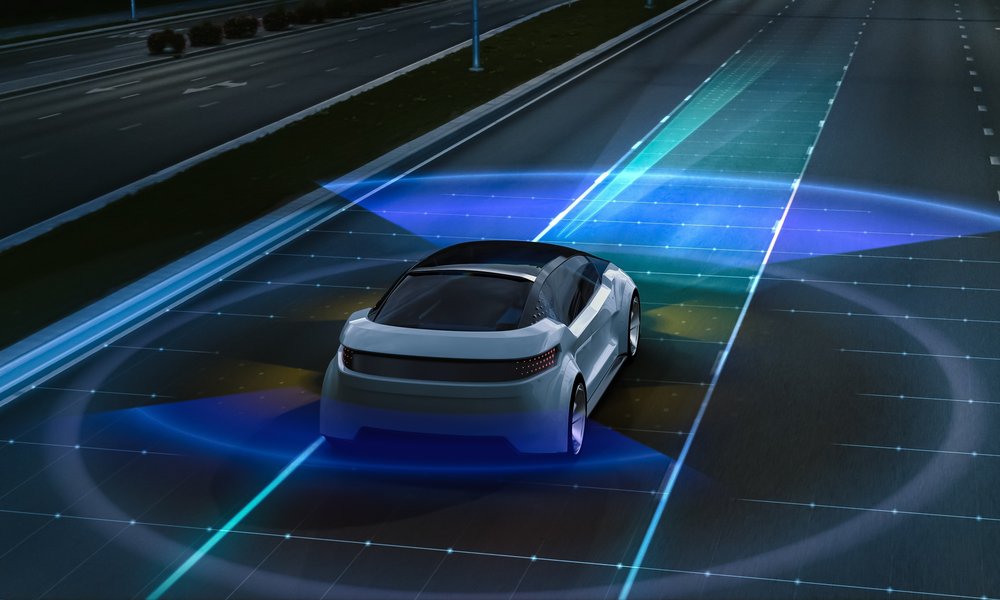
Turning vehicles into intelligent network citizens
As AI moves from digital assistants into vehicles, robots, drones and industrial machines, communications service providers have an opportunity to play a more strategic role than providing connectivity alone. Physical AI systems need predictable network behavior, real-time data exchange and trusted orchestration across devices, applications and infrastructure. Without those capabilities, autonomous services risk being limited by best-effort connectivity, fragmented interfaces and slow operational response.
The Moonshot Catalyst project, AI for vehicle: Open telecom AI infrastructure (OTAI) - Phase II, showcased at DTW Ignite 2026, addresses this gap by demonstrating how telecom networks can evolve from connecting information to connecting intelligence. Its flagship scenario is smart pharmaceutical cold chain logistics, where temperature-sensitive medicine must be transported from a warehouse in Nanjing to a hospital pharmacy in Shanghai under strict time, temperature and data-integrity requirements.
The stakes are high. The project team points to the fact that a deviation of just plus or minus 2°C can ruin vaccines, while around 50% of vaccines are wasted globally and logistics failures account for an estimated $35 billion in annual losses. In this context, network intelligence is not a nice-to-have. It becomes part of the service outcome.
OTAI Phase II is built around three capability shifts that are becoming increasingly important as operators support agentic and autonomous services: moving from best-effort connectivity to network determinism, from fixed policy to scenario-adaptive agents, and from static APIs to intelligent capability exposure. Traditional networks were not designed for uplink-heavy, real-time telemetry from moving vehicles and intelligent machines. By using network run-time agents with perception, prediction, assurance and execution capabilities, the Catalyst shows how operators can expose deterministic connectivity aligned to business outcomes, not just network availability.
In the cold chain scenario, this means using 5G slice and resource reservation capabilities to assure service levels when vehicles are carrying temperature-sensitive pharmaceuticals. Rather than waiting for quality of experience to degrade, the network can predict risk, trigger alarms and push assurance actions before a service failure affects the shipment.
The wider ambition is to make Physical AI agents, including vehicles, robots and drones, first-class citizens of the network. In practical terms, this means the network can understand the operational context of an autonomous service, match connectivity and compute capabilities to the required outcome, and coordinate agents across business and network domains.
In the pharmaceutical cold chain use case, OTAI enables natural language task creation, automatic agent orchestration, predictive alarm triggering, sandbox-based simulation and continuous learning through memory and knowledge injection. If a route, network condition or operational environment is unfamiliar, the platform can simulate and validate agent behavior before applying it in the real world, helping close the sim-to-real gap that can otherwise limit first-time success rates to below 75%.
Gao Xin, Senior Solution Architect at China Mobile, said the project’s OTAI architecture is important because it creates a three-layer agent model for operations, operations and maintenance, and infrastructure. Using cold chain transportation as an example, he said it can help operators create a new revenue model based on “intelligent connection as a service,” with the potential to improve ARPU and network resource utilization for industry customers.
The Catalyst draws on a broad set of TM Forum assets to support a standards-based approach to agentic telecom infrastructure. These include TM Forum Open APIs such as TMF640, TMF641 Intent Management, TMF642 Alarm Management, TMF655 Change Management, TMF716 Resource Reservation, TMF785 Copilot and TMF939 Agent Management, as well as Autonomous Networks Level 4 solution packages and AI4Vehicle case studies.
According to the project team, OTAI Phase II leverages more than seven existing TM Forum Open APIs and Autonomous Networks Level 4 solution packages, while contributing new assets including Agent Management and Agentic AI as a Service. This standards-based foundation matters because Physical AI services will need to work across different networks, devices, vendors, business platforms and operational domains.
The commercial case is grounded in growing demand for assured, intelligent logistics and autonomous services. The team estimates that the pharmaceutical cold chain market will grow from $22.75 billion in 2025 to $44.1 billion in 2033. For operators, the project points to a new revenue model based on Intelligent Connectivity as a Service, with potential ARPU increases of 20% to 30%, network resource utilization improvements of 10% to 20% and more than 15% incremental margin from platform commission and API call monetization.
For pharmaceutical and logistics customers, OTAI targets 15% to 25% gains in transport efficiency, an 80% or greater reduction in temperature-sensitive pharmaceutical loss and 40% to 60% lower audit and compliance costs. Exception response times could move from hours to seconds, while fault recovery could improve from hours to minutes.
The same platform approach could extend beyond cold chain logistics into smart manufacturing, energy and utilities, autonomous logistics and healthcare. For society, the most immediate value is in reducing vaccine waste, protecting public health and lowering the environmental and financial cost of failed logistics.
At DTW Ignite 2026, AI for vehicle: Open telecom AI infrastructure (OTAI) - Phase II was recognized as a finalist in the Moonshot Catalyst awards, in both the Trustworthy AI and Data challenge category and the Showcase and storyline excellence category. The recognition reflects the project’s contribution to the Agentic Internet Moonshot vision: moving telecom infrastructure from passive connectivity toward open, intelligent infrastructure that can orchestrate agents, assure outcomes and support new business models for autonomous systems.
For CSPs, the project offers a practical blueprint for monetizing network intelligence through APIs, assurance and agent orchestration. For enterprises, it shows how critical operations such as cold chain logistics can gain greater predictability and resilience. And for the wider industry, it demonstrates how open standards can help make Physical AI scalable, interoperable and commercially viable.